Summary: At 2:00 PM ET, institutional investors execute a distinct trading pattern following major economic data releases. This behavior stems from structural differences in how professional money managers and retail traders process information, manage risk, and access liquidity. Understanding this dynamic reveals why markets often spike, reverse, and settle into new ranges within minutes of key announcements—and why the initial reaction is frequently a trap for retail traders.
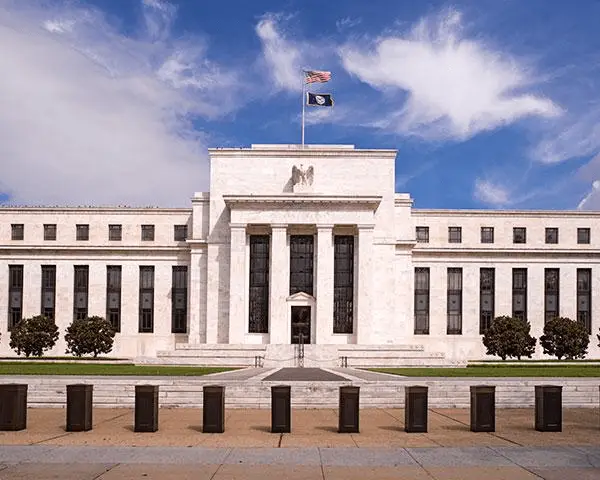
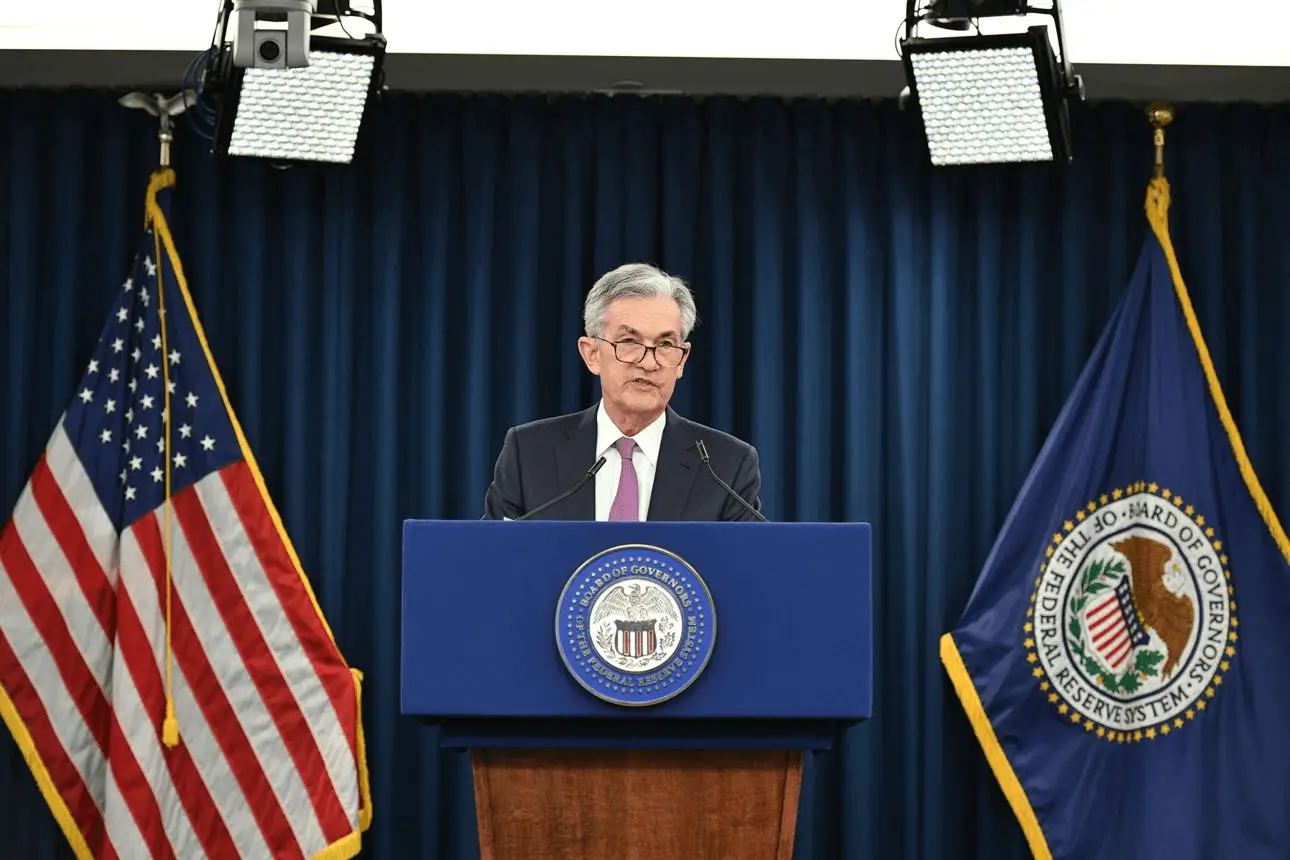
The financial markets operate on a schedule that is as predictable as it is unforgiving. At precisely 8:30 AM ET, the U.S. Bureau of Labor Statistics releases the Consumer Price Index (CPI). At 2:00 PM ET, the Federal Open Market Committee (FOMC) publishes its minutes or policy statement . These moments are etched into the calendars of every professional trader on Wall Street.
But what happens in the seconds and minutes following these releases reveals a fundamental disconnect between how institutional money moves and how retail traders react. This is the “2 PM Effect”—a pattern of institutional behavior that consistently leaves retail traders chasing false breakouts, trapped in liquidity sweeps, and wondering why the market moved against them despite the news seemingly confirming their thesis.
The Institutional Trading Day: A Different Rhythm
To understand why institutional money moves differently, you must first understand how professional traders structure their day. Academic research examining investor-segregated cash flows has documented clear patterns in when different investor types execute trades .
Institutional investors tend to concentrate their trading activity toward the market close, while retail investors are more active at the open . This isn’t accidental. Professional money managers operate under portfolio constraints, benchmark requirements, and risk management mandates that shape their trading windows. They wait for liquidity to stabilize, for spreads to normalize, and for the initial emotional reaction to subside before deploying capital.
This institutional patience stands in stark contrast to retail behavior. Data from major brokerages shows that retail traders are significantly more likely to place orders at market open, often reacting to overnight news or pre-market moves . The “evaluate in the evening, trade in the morning” pattern has been a consistent feature of retail investing behavior.
The Microstructure of a News-Driven Liquidity Sweep
When a Tier-1 economic print hits the wire, the immediate reaction is rarely a genuine macroeconomic repricing. Rather, it is a highly orchestrated algorithmic liquidity hunt .
The sequence unfolds with mechanical precision:
Minute 0-3: High-frequency trading algorithms detect the data release and execute programmed responses. The spread widens dramatically as market makers pull limit orders to protect themselves from volatility. Attempting to enter a trade during this window using market orders exposes traders to devastating slippage—sometimes executing 30 pips away from the intended price .
Minute 3-15: The initial algorithmic spike or drop occurs. This move typically violates nearby technical levels—breaking above resistance or below support—triggering a cascade of retail stop-losses and breakout orders . This is not a trend; it is a liquidity extraction mechanism. Institutional market makers use the volatility of news events to push prices into zones where retail stops are resting.
Minute 15+: Once the institutional sell orders are filled into the retail buying frenzy, the buying pressure evaporates. Market makers pull their bids, and the price collapses back through the range . The news wasn’t the catalyst for a trend; it was the smokescreen required to engineer liquidity.
The Data Behind the Divergence
The institutional-retail divergence is not anecdotal—it is quantifiable. Recent data from major financial institutions shows that retail traders have accounted for approximately 20% of equity market volume, a figure that has steadily grown over the past decade . However, the behavior of this retail cohort has shifted dramatically.
Options trading volume provides a particularly stark illustration. In 2015, just 3% of options volume was in derivatives with less than 24 hours to expiration. By 2025, that figure had exploded to 54% of options trading volume on the S&P 500 index . This is not institutional hedging activity; retail speculation in 0DTE (zero-days-to-expiration) options now makes up over 55% of average daily volume in these products .
The result is a market where retail traders are increasingly taking on high-risk, short-term positions while institutions maintain disciplined, longer-term frameworks. During periods of market stress—such as the post-Liberation Day volatility in 2025—institutional clients became the biggest net sellers in over 15 years while retail traders continued buying the dip .
Trading the Reaction, Not the News
Professional traders understand that attempting to trade the exact moment of a data release is a losing proposition. The execution risks are too severe: slippage, spread widening, and the inability to fill orders at intended prices make the first 60 seconds a danger zone .
Instead, successful news traders employ tactical patience. The approach typically follows this framework :
- Pre-event planning: Mark key releases on the economic calendar, note expected figures versus prior results, and define risk per trade before the event.
- The observation window: Wait for the 5-minute or 15-minute candle to close after the release. Look for structural failure—a liquidity sweep where price pierces a key level, triggers the stops, and immediately rejects.
- Entry and invalidation: Once the false breakout is confirmed, enter the trade with a stop-loss placed just beyond the peak of the news wick. If price breaks that wick, the thesis is invalid—the initial move was genuine, and the trade must be exited .
- Take-profit targeting: The primary target is the price level before the news was released—the origin of the manipulation. This creates a favorable risk-to-reward ratio, often exceeding 3:1

Also Read: The Morning Brief: Why Yesterday’s Headlines Rarely Predict Today’s Moves
Why Retail Reacts Differently
The behavioral gap between institutional and retail trading runs deeper than execution mechanics. It reflects fundamental differences in how each group processes information.
Retail investors are more likely to buy dips than professional money managers because they hold the assumption that markets will eventually recover, regardless of short-term volatility . This “buy-the-dip” mentality, while not inherently flawed, creates predictable patterns that institutions exploit.
Institutional traders operate under different constraints. They manage inventory at scale, integrate cross-market information, and often execute trades programmatically across different time zones . Their decision-making is less susceptible to the emotional urgency that drives retail responses to news headlines.
The bias trap is another factor. Traders are influenced by receiving news from a single source, making them vulnerable to its impact without allowing space for contrary opinions . This confirmation bias leads retail traders to overweight information supporting their pre-existing positions and dismiss evidence pointing to the other side. Institutions, with their multi-source information frameworks, are better equipped to maintain objectivity.
Beyond the Immediate Reaction
The 2 PM Effect extends beyond the immediate post-news volatility. Research on investor-segregated cash flows shows that retail trading activity exhibits significantly stronger persistence than institutional flows . In other words, retail buying and selling tends to continue in the same direction over longer periods, while institutional flows show more rapid mean reversion.
This pattern has implications for market dynamics. The prevalence of 0DTE options trading has transformed intraday volatility from a definable metric to an obscure phenomenon . Traditional volatility measures like the VIX, which uses options with 23-37 days to expiration, fail to capture the intraday volatility created by these strategies. During periods of market stress, the 1-Day VIX can significantly overshoot realized monthly volatility .
For the retail trader, the lesson is clear: the market’s initial reaction to news is rarely the final word. The spike is often the lie; the fade is frequently the truth.
Beyond the Headlines
The 2 PM Effect is not a conspiracy or a manipulation scheme. It is a market structure, a function of how different investor types access liquidity, manage risk, and interpret information. Understanding this structure does not guarantee profitability, but it does provide a framework for making better trading decisions.
The most important question a trader can ask when news hits is not “What does this mean for the market?” but rather “How are different market participants likely to react to this information, and what are the predictable consequences of those reactions?”
This question shifts the focus from prediction to preparation. It transforms trading the news from gambling into risk management—and that is the distinction between professionals and amateurs.

Also Read: Decoding the Fed’s Language: What Traders Listen for Beyond the Rate Decision
The Information Cycle
The financial markets are a zero-sum transfer mechanism in the short term. Capital flows from those who react emotionally to those who operate systematically. The 2 PM Effect is a reminder that in the age of instant information, speed is not the same as edge.
The institutional investor’s advantage is not faster execution—it is the discipline to wait for the dust to settle, to read the microstructure rather than the headline, and to execute a plan rather than a reaction. For the retail trader willing to adopt this mindset, the news release becomes not a source of anxiety but an opportunity to observe the architecture of the market in action.
Frequently Asked Questions
What is the 2 PM Effect in trading?
The 2 PM Effect refers to the pattern where institutional investors execute significant trades following major economic data releases, particularly FOMC announcements that occur at 2:00 PM ET. This institutional activity often creates predictable market reactions that retail traders then respond to, frequently at a disadvantage.
Why do institutional investors trade differently than retail traders?
Institutions operate under portfolio constraints, benchmark requirements, and risk management mandates that shape their trading behavior. They tend to trade during periods of higher liquidity (often toward the market close) and can execute large positions without causing excessive slippage. Retail traders typically trade at market open and are more likely to react emotionally to news headlines.
What is a liquidity sweep in news trading?
A liquidity sweep occurs when algorithmic trading forces prices to break through key technical levels during a news event. This triggers retail stop-loss orders and breakout trades, providing liquidity for institutional investors who have placed orders at those levels. The price then often reverses, trapping the retail traders who chased the breakout.
How does 0DTE options trading affect market volatility?
Zero-days-to-expiration options now account for over 54% of S&P 500 options volume. This concentration of short-dated options can increase intraday volatility while diminishing longer-term volatility measured by the VIX. During market stress, intraday volatility can significantly exceed what traditional volatility measures capture.
What is the safest way to trade around economic news releases?
The safest approach involves pre-event planning, waiting for the initial volatility to subside (typically 5-15 minutes), looking for structural failure patterns like false breakouts, and using strict stop-loss orders placed beyond the news wick. Limit orders rather than market orders help control slippage.
How much of equity market volume comes from retail traders?
Retail traders now represent approximately 20% of equity market volume, up significantly from pre-pandemic levels. This increased retail participation has fundamentally changed market dynamics, particularly in options markets.
What are the main risks of trading immediately after news releases?
The main risks include spread widening (brokers increase spreads before announcements), slippage (orders executing at different prices than expected), emotional over-reaction leading to impulsive trades, and data whipsaws (markets spiking in both directions before choosing a trend).
Do institutional investors ever trade against the momentum characteristic?
Research shows that institutions collectively tend to trade against the momentum characteristic, meaning they are more likely to sell stocks that have performed well and buy stocks that have performed poorly. This contrasts with retail investors who tend to trade with momentum.
The Execution Protocol
- Wait for the first 5-15 minute candle to close after the news release
- Look for a liquidity sweep that takes out a key level and immediately rejects
- Enter only after the false breakout is confirmed
- Place stop-loss strictly 1-2 pips beyond the extreme of the news wick
- Take profit at the pre-news price level
- Accept a small defined loss if the thesis is invalidated
Disclaimer
This content is for educational and informational purposes only and does not constitute financial or trading advice. Past performance, whether actual or simulated, does not guarantee future results. Trading involves substantial risk, including the potential loss of principal. All trading decisions should be made based on your individual circumstances and in consultation with a qualified financial professional. The author and publisher assume no liability for any losses incurred from the use of this material.